My Flickr European Drift
What a trip!
6 May 2026.
I pointed Vanilla south.
That sounds ridiculously simple now.
I wasn't heading for a campsite fifty miles away. I wasn't doing a long weekend. I wasn't even really heading for one destination.
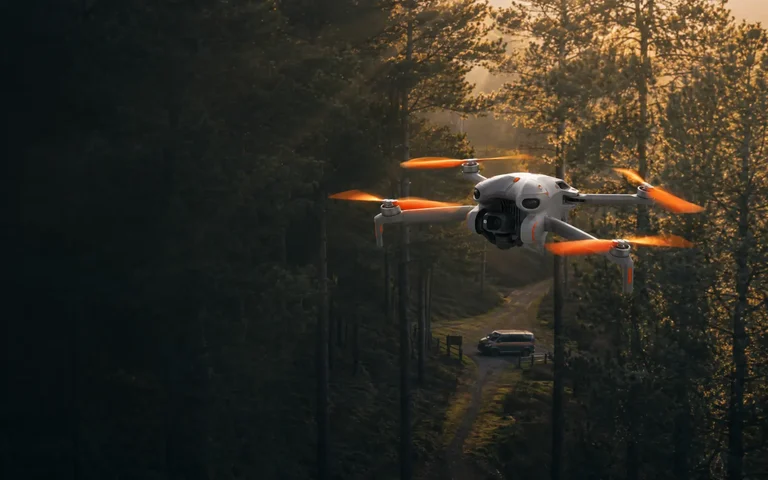
I was leaving Stafford with a grey VW campervan, cameras, drone, enough cables to rewire a small European principality and a wonderfully loose idea:
Keep going.
France first.
Then Switzerland.
Then Italy.
After that?
Drift.
And that is exactly what happened.
Thirty days later Vanilla returned home having drawn a huge loop through Europe, crossed twelve countries, reached the Adriatic, dipped briefly into Bosnia, climbed back through the Alps, crossed central Europe and eventually found her way home through Bruges and the Channel.
It became one of those journeys where the map afterwards looks slightly ridiculous.
I absolutely love it.
📸 EXPLORE ALL 2,302 EUROPEAN DRIFT PHOTOS
6 May to 4 June 2026
30 days
29 nights away
12 countries
23 proper movement days
3,850.6 miles recorded by Vanilla's VW trip computer
3,826.5 miles from the independent raw GPS trace
4,128.3 miles using detailed Google road geometry
101 hours 02 minutes driving
Approximately 527.8 litres of diesel consumed
Approximately 33.2 mpg overall
2,302 Flickr photographs
8 Flickr videos
THE ROUTE
UK → France → Switzerland → Italy → Slovenia → Croatia → Bosnia & Herzegovina → Croatia → Slovenia → Austria → Germany → Czechia → Germany → Netherlands → Belgium → France → UK.
That little line of text still makes me grin.
Because every arrow represents another border, another road system, another language, another fuel stop, another view through Vanilla's windscreen and another moment where somewhere completely unfamiliar started feeling strangely normal.
FRANCE: JUST KEEP POINTING SOUTH
The first huge push was about getting properly into Europe.
Channel crossed.
France underneath the wheels.
Sommesous.
Belfort.
The geography began changing gradually. Britain had disappeared behind me, northern France stretched away and somewhere ahead were mountains.
Proper mountains.
The kind that make Cannock Chase look as though somebody forgot to finish it.
LAUTERBRUNNEN: EUROPE SUDDENLY WENT VERTICAL
Then Switzerland happened.
And specifically Lauterbrunnen.

Lauterbrunnen doesn't gently introduce itself.
The valley walls simply rise.
Waterfalls pour down them.
Snowy mountains sit above everything.
And Vanilla suddenly looks extremely small.
The valley is famous for 72 waterfalls. Staubbach Falls alone drops roughly 300 metres from the cliff above the village.
Goethe visited in 1779 and was inspired by the waterfall.
I arrived in a Volkswagen Transporter with a drone.
Culture evolves.
Explore Lauterbrunnen and its 72 waterfalls
This became my first major two-night Alpine base.
And already the idea of simply driving quickly across Europe had gone completely out of the window.
SWITZERLAND TO ITALY: ONE OF THOSE DRIVES
The route south from Switzerland was spectacular.
Mountain roads.
Passes.
Huge scenery.
Then the character changed again.
Italy appeared.
And by 10 May Vanilla was beside Lake Como.

LAKE COMO: VANILLA DISCOVERS THE ITALIAN GOOD LIFE
Lake Como feels almost unfairly attractive.
Mountains run straight into deep blue water.
Villages cling to the shoreline.
Historic villas sit behind gardens that make the average Staffordshire patio feel rather underfunded.
The tradition of grand villas around Como goes back astonishingly far. Even the Romans recognised the strategic importance and beauty of the lake, and wealthy Romans built villas around it.
Two thousand years later I arrived with Vanilla.
I'd call that continuity.
Discover the history and landscape of Lake Como
TUSCANY: THE ROAD TRIP TURNS INTO A PAINTING
Then I headed deeper into Italy.
Lucca.
San Gimignano.
Monteriggioni.
Siena.

Tuscany is almost irritatingly photogenic.
You turn a corner and there is another hill town.
Another row of cypress trees.
Another ancient wall.
Another view apparently designed by somebody working for the Italian Tourist Board.
Siena is particularly extraordinary.
UNESCO describes its historic centre as the embodiment of a medieval city. The city developed across three hills, with its main streets converging towards Piazza del Campo.
The wonderful bit is that medieval Siena wasn't merely building buildings.
It was competing with Florence.
Even town planning became part of the rivalry.
Explore UNESCO's Historic Centre of Siena
BOLOGNA TO VENICE: ITALY JUST KEEPS CHANGING CHARACTER
From Siena the Drift ran through the Florence corridor and across the Apennines to Bologna.
Then, on 14 May, Vanilla pointed north-east.
Bologna.
Padua.
Venice.
Trieste.

Venice is one of those places that seems too improbable to have survived.
The historic city spreads across 118 small islands in its lagoon.
It began developing in the fifth century and became a major maritime power by the tenth.
For centuries, Venice connected Europe with trading worlds far beyond it.
I connected with it by trying to work out where I'd left the van.
Read the UNESCO story of Venice and its Lagoon
ITALY HANDS VANILLA TO THE ADRIATIC
Sistiana and the Trieste region were the hinge.
Behind me was Tuscany and northern Italy.
Ahead lay Slovenia, Croatia and the long Adriatic coast.
The trip was about to change character again.
CROATIA: THIS IS WHERE THE DRIFT FOUND THE SEA
Through Slovenia.
Across another border.
Then Opatija.

The Adriatic then became the spine of the journey.
Opatija.
Bibinje.
Zadar.
Split.
Every day the sea kept appearing beside the road.
One of the great things about travelling this way in Vanilla is that somewhere spectacular doesn't have to be an excursion.
You simply live there for the night.
Park.
Open the door.
Put the kettle on.
Adriatic outside.
That will do.
DUBROVNIK: THE SOUTHERN TURNING POINT
On 21 May I left Split and continued south along the Dalmatian coast.

Dubrovnik became the great southern anchor of European Drift.
The city was an important Mediterranean sea power from the thirteenth century onwards.
Its story is much rougher than the gleaming limestone streets suggest.
A catastrophic earthquake struck in 1667.
Centuries later, Dubrovnik was badly damaged again during the conflict of the 1990s.
And yet there it stands.
Walls.
Fortifications.
Palaces.
Churches.
Terracotta roofs meeting the blue Adriatic.
Discover UNESCO's Old City of Dubrovnik
For a couple of days the frantic forward movement stopped.
This wasn't a record attempt.
It was my month.
And sometimes the best decision was simply not to drive.
THEN EUROPEAN DRIFT QUIETLY BECAME A 12-COUNTRY TRIP
24 May is one of my favourite little forensic discoveries from the whole expedition.
I turned north.
Dubrovnik behind me.
Omiš ahead.
And in between?
Bosnia & Herzegovina.

The road crossed the narrow Bosnian coastline at Neum before returning to Croatia.
And the really satisfying nerdy bit?
Vanilla's own VW telemetry independently recorded a fuel-counter reset around Neum.
So Bosnia isn't a vague memory or a line that accidentally clipped a border on a map.
The van itself proves it.
I may be disproportionately pleased by that.
PLITVICE: WATER DOING ENGINEERING
From the coast I turned inland.
And on 25 May the journey reached the Plitvice region.

Plitvice Lakes look impossibly designed.
Waterfalls spill from one lake into another through forests and limestone.
But the clever part is that the landscape is still building itself.
Mineral-rich water deposits calcium carbonate, gradually forming natural tufa barriers.
Those barriers create lakes.
The water spills over them.
More barriers form.
The architecture is alive.
Explore the extraordinary geology of Plitvice Lakes
SLOVENIA: BLED DOESN'T LOOK REAL
Then north again.
Croatia gave way to Slovenia.
Ljubljana appeared in the route.
Then Lake Bled.

Bled is the sort of place where you suspect somebody has overdone the scenery slider.
Lake.
Island.
Church.
Castle.
Alps behind it.
Of course.
Visitors were coming here long before Instagram discovered it. Pilgrims travelled to the Church of the Assumption on the island, and Bled's thermal springs were being written about in the seventeenth century.
Read Bled's tourism and pilgrimage history
BLED TO ZELL AM SEE: A SMALL MILEAGE DAY WITH HUGE GEOGRAPHY
27 May.
Bled behind Vanilla.
Austria ahead.
The route threaded through Velden and the Villach area, then climbed into the Tauern corridor.
Pfarrwerfen.
Taxenbach.
Then Zell am See.

Zell am See immediately became another of those places where the campervan made complete sense.
Lake Zell.
Mountains.
Snow higher up.
Vanilla parked amongst it.
The settlement itself is ancient. Zell am See is recorded in documents from the eighth century, while archaeological finds in the area go back to Celtic times around three thousand years ago.
The lake also has a brilliant piece of industrial history.
During the freezing winter of 1883/84, up to 450 people worked cutting natural ice from Lake Zell. Railway wagons then carried it away for use in breweries, inns and other businesses.
I looked at the lake and thought it was beautiful.
Nineteenth-century Zell looked at it and thought:
Refrigeration business.
Discover the history of Zell am See
THE RETURN JOURNEY WASN'T REALLY A RETURN JOURNEY
This is something I love when I look at the complete route.
Dubrovnik wasn't followed by three days blasting north on motorways while thinking about Stafford.
Not even close.
The journey home became another holiday.
Zell am See.
Tyrol.
Bavaria.
Herrsching am Ammersee.
Regensburg.
Czechia.
Cheb.
Then back into Germany.
CZECHIA TO WOLFSBURG: VANILLA STARTS THE LONG NORTHERN ARC

Wolfsburg felt appropriate.
I'd crossed a chunk of Europe in a Volkswagen and somehow found myself in Volkswagen's home city.
Vanilla returning to the mothership.
Except she had considerably more camping equipment than the average exhibit.
GERMANY TO THE NETHERLANDS
31 May carried the Drift west again.
Wolfsburg.
Hanover.
Osnabrück.
Then the Dutch border.
Deventer.

And then something radical happened.
I stopped.
Properly.

After nearly a month of constant geographical change, a day involving practically no mileage felt wonderfully extravagant.
BELGIUM: ONE LAST PROPER EUROPEAN CITY
From Deventer I headed south-west.
Antwerp.
The Ghent corridor.
Then Bruges.
And Bruges was a magnificent place to begin closing the loop.
Today it looks almost impossibly preserved, but medieval Bruges was not some sleepy decorative town.
It was one of Europe's major commercial centres.
Its canals carried mercantile traffic, its merchants traded internationally and the city became a major centre of Flemish painting.
The medieval street pattern is still largely there.
Explore UNESCO's Historic Centre of Bruges
3 JUNE: THE ORANGE LINE FINALLY POINTS HOME
Bruges.
De Panne.
Dunkirk.
Calais.
Channel.
England.

And then the motorway signs became familiar again.
Home arrived in the early hours of 4 June.
Vanilla rolled back into Stafford.
Thirty days after leaving.
SO HOW FAR DID I ACTUALLY DRIVE?
This is where European Drift gets wonderfully nerdy.
There isn't one single honest number.
Vanilla's VW trip computer: 3,850.6 miles.
Raw GPS fixes: 3,826.5 miles.
Dense Google road geometry: 4,128.3 miles.
That isn't a contradiction.
It is what happens when three different systems measure movement in three different ways.
My favourite figure is the VW one because it came from Vanilla herself.
3,850.6 actual vehicle miles.
But the bigger story is that three completely independent datasets all describe the same enormous loop.
Europe genuinely got drawn by a Transporter.
WHAT THOSE MILES CONTAINED
France.
Seventy-two waterfalls at Lauterbrunnen.
Swiss mountain passes.
Lake Como.
Tuscany.
Siena.
Florence.
Bologna.
Venice.
Trieste.
Slovenia.
The Croatian Adriatic.
Split.
Dubrovnik.
Bosnia and Herzegovina.
Omiš.
Plitvice.
Bled.
Zell am See.
Bavaria.
Czechia.
Wolfsburg.
The Netherlands.
Belgium.
Bruges.
Then home.
THE THING I LOVE MOST ABOUT EUROPEAN DRIFT
I didn't fly somewhere and stay there.
I watched Europe change through the windscreen.
That's completely different.
You notice the transitions.
Road markings change.
Architecture changes.
Fuel stations change.
Supermarkets change.
Mountains appear.
Mountains disappear.
The language on the road signs changes.
The food changes.
The temperature changes.
And through all of it, the same little grey campervan stays constant.
My bed.
My kitchen.
My camera store.
My charging station.
My tea-making department.
My front-row seat to Europe.
2,302 PHOTOGRAPHS
That sounds excessive.
It probably is.
But looking through them now, I understand why there are so many.
This wasn't one destination.
It was hundreds of tiny journeys stitched together.
A French motorway service station.
A Swiss waterfall.
An Italian hill town.
A Croatian sunset.
A Bosnian road sign.
An Austrian mountain.
A German campsite.
A Dutch street.
A Belgian canal.
None of those photographs alone is European Drift.
All of them together are.
I CALLED IT EUROPEAN DRIFT FOR A REASON
There was structure.
Of course there was.
I knew roughly where I wanted to go.
But I didn't want a military timetable.
I wanted to drift.
Stay somewhere because I liked it.
Move on because the road ahead looked interesting.
Turn off because something caught my eye.
Spend two nights somewhere spectacular.
Have a day where the van barely moved.
And let Europe decide quite a lot of the detail.
That freedom was the journey.
THIRTY DAYS LATER
I came home with dirt on Vanilla, thousands of photographs, a ludicrous amount of GPS data and an entirely different sense of how close Europe actually is.
Switzerland doesn't feel like a distant country once you've driven there.
Croatia doesn't feel exotic once you've made breakfast beside it.
Bosnia isn't an abstract shape on a map once Vanilla has rolled through Neum.
Austria becomes somewhere you remember buying fuel.
The Netherlands becomes somewhere you had a quiet day.
And Bruges becomes the place where you realised the adventure was nearly over.
That's what campervan travel does.
It shrinks maps.
It converts countries into memories.
It turns borders into ordinary moments.
And every now and again you look at the complete route afterwards and think:
I actually drove that.
I did.
Vanilla did.
Thirty days. Twelve countries. Nearly four thousand miles.
One enormous European loop.
And I'd do it again tomorrow.
📸 EXPLORE ALL 2,302 EUROPEAN DRIFT PHOTOS
EUROPEAN DRIFT 2026
6 May → 4 June
Photography: John Nickolls / NIX
Transport: Vanilla, VW T6.1