WEIGH THE FLOUR
A compact 250g-flour dough notices casual measurements. Scales beat cups, optimism and holding the bag at an angle.

Loading forecast…
Full forecast →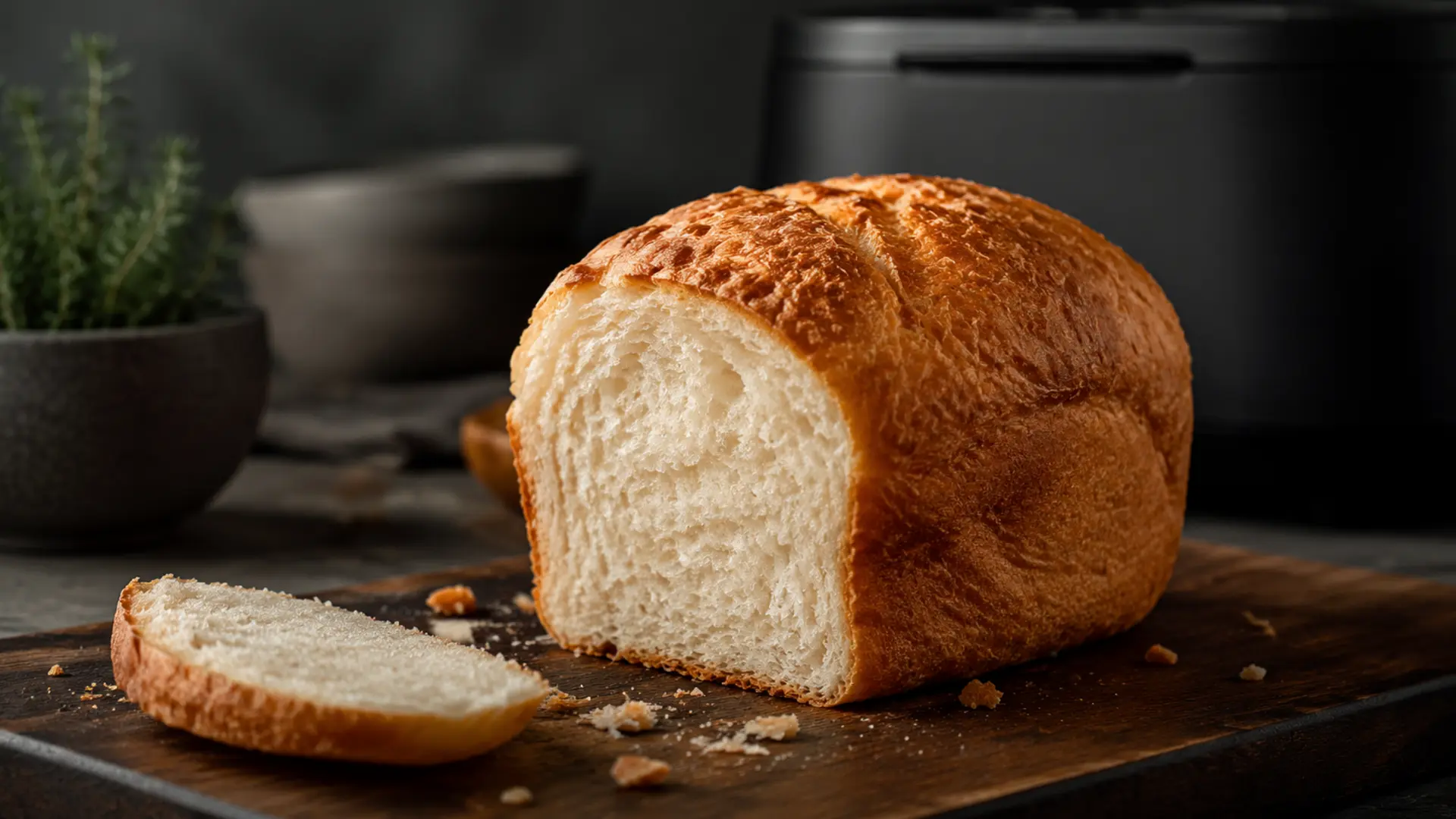
CRACKLING CRUST. SOFT MIDDLE. SMALL-LOAF PERFECTION.
Bread-machine loaves naturally leave the machine with moisture trapped around them. That moisture is kind to the crumb but not to the crust. The answer is not mysterious bread chemistry: use a lean dough, remove it immediately and let the steam escape.
This PN100 formula contains no butter or oil because fat tenderises crust. A teaspoon of lemon juice helps the compact dough hold a better shape without adding a noticeable flavour.
For the absolute best crunch, the bread maker does the mixing, proving and main bake; a short blast in a hot oven finishes the outside. The PN100 performs the long shift. The oven merely signs the paperwork.
01165ml cool water
025ml (1 teaspoon) lemon juice
03250g strong white bread flour
045g (1 level teaspoon) caster sugar
053.75ml (¾ teaspoon) fine salt
062.5ml (½ teaspoon) easy-bake dried yeast
071 teaspoon semolina or rice flour for the base, optional
Tick what you already have. What remains is your shopping list.
Approximate values per slice when cut into 8. Ingredient brands, exact weights and cooking losses will alter the final figures.
Cost basis: Approximate UK supermarket own-brand prices for the quantities used. Electricity varies by tariff and is excluded.
Nutrition basis: Approximate values for one eighth of the plain loaf. Spreads, fillings and the heroic amount of butter applied while nobody is looking are excluded.
Fit the kneading blade securely. Make sure the pan and blade are clean, dry and at room temperature. A damp yeast corner is a premature-launch facility.
Pour 165ml cool water into the pan, followed by the lemon juice. The tiny amount of acid helps the dough hold its structure and does not make the loaf taste lemony.
Tip in all 250g of strong white bread flour so it completely covers the liquid. If using semolina or rice flour, reserve it for the finished loaf rather than adding it to the dough.
Place the sugar in one corner and the salt in the opposite corner. Make a shallow well in the centre of the flour, ensuring it does not reach the liquid, and add the yeast to the well.
Lock the pan into the Panasonic SD-PN100. Select Menu 1: Basic and start. This is deliberately a lean dough with no butter or oil: fat softens crust, which is excellent for sandwiches and entirely unhelpful here.
Keep the lid closed through mixing, proving and baking. If you check during the first knead, the dough should form a smooth, soft ball that clears most of the pan. Add no flour unless it is genuinely puddling; flour varies and panic is a poor ingredient.
The moment the cycle ends, wear oven gloves, remove the pan and turn out the loaf. Extract the blade carefully if it remains in the base. Do not leave the loaf on Keep Warm: trapped steam is the sworn enemy of crisp crust.
For the crispest result, have the oven preheated to 200°C conventional / 180°C fan. Lightly mist or brush the loaf with water, dust the base with the optional semolina or rice flour, and place it directly on the oven rack for 8–10 minutes until the crust sounds dry and firm.
Move the loaf to a wire rack and leave it completely uncovered for at least 60–90 minutes. Do not bag it, box it or slice it warm. The crumb is still setting and escaping steam would soften the crust from within.
The loaf is at peak crispness on baking day. To restore the crust, place the unsliced remainder in a 180°C oven for 5 minutes, then cool for 10 minutes before slicing.
The loaf will still have the firmest crust the PN100 can sensibly produce if you use the lean dough and de-pan it immediately.
Cool it on a raised wire rack with air moving underneath. After 20 minutes, rotate it onto one side for 10 minutes, then the other side for 10 minutes so the base releases moisture evenly.
The optional oven finish creates the genuinely brittle, bakery-style shell. Without it, expect crisp rather than crackling—and still a very good loaf.
A compact 250g-flour dough notices casual measurements. Scales beat cups, optimism and holding the bag at an angle.
The PN100 controls its own cycle. Hot water can race the yeast before the machine is ready, particularly in a warm kitchen.
Cutting early compresses the crumb and releases the steam needed to finish setting the loaf. Give it at least an hour.
A dependable little white loaf with a soft, springy centre and a crust that finally behaves like crust—not a padded envelope.
COOL IT. CRACK IT. BUTTER IT WHILE IT STILL HAS DIGNITY.