MARIS PIPER
The classic high dry-matter choice for a fluffy middle and crisp shell. King Edward is another cracking option.

Loading forecast…
Full forecast →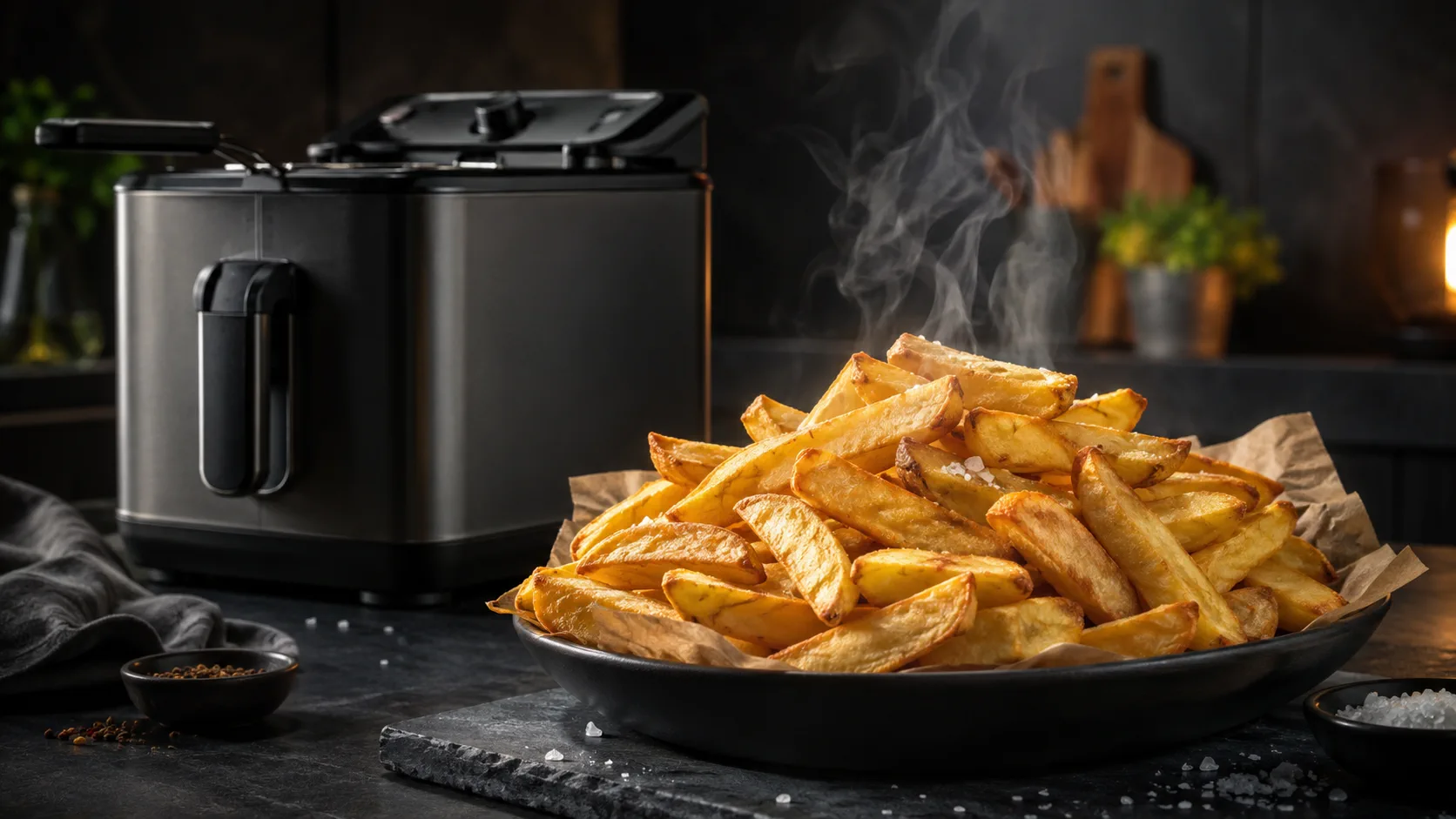
PROPER GOLDEN CHIPS. CRISP OUTSIDE. FLUFFY INSIDE.
There are chips, and then there are chips worth heating a pan of oil for. This is the NIX method for a proper single portion in the Tefal fryer.
The trick is wonderfully old-school: cook them twice. The first fry cooks the potato; the second builds the crisp golden shell. No coatings. No air-fryer gymnastics.
Crunch outside. Potato cloud inside.
Tick what you already have. What remains is your shopping list.
Approximate values per generous portion. Ingredient brands, exact weights and cooking losses will alter the final figures.
Cost basis: Typical supermarket potato, salt and an allowance for oil absorbed during frying. It excludes the cost of initially filling the fryer.
Nutrition basis: Based on 325g potato and an estimated 35g oil uptake. Actual oil absorption varies considerably.
Peel for the classic chip-shop finish, or scrub and leave the skins on for a more rustic chip. Cut every chip roughly 12–15mm thick so they cook at the same rate.
Rinse in cold water until the cloudiness clears. For an especially crisp finish, soak for 20–30 minutes.
Drain, then dry thoroughly with a clean tea towel or kitchen paper. They must feel dry before going anywhere near hot oil.
Let the fryer fully reach 160°C. Lower the basket carefully and fry for 6–8 minutes. The chips should be pale, soft and cooked inside—not golden.
Raise the basket and leave the chips to rest. Steam escapes and the surface dries, preparing it for a properly crisp finish.
Wait until the oil genuinely reaches 190°C, then fry for 3–5 minutes. Watch the colour: they are ready when golden, crisp and lightly blistered.
Drain above the fryer for about 30 seconds, give the basket a gentle shake and season immediately. Start with around ¼ teaspoon of fine salt.
The first fry cooks the starch inside while moisture migrates towards the surface as steam. The rest lets more of that steam escape and dries the exterior.
The hotter second fry rapidly removes surface moisture and encourages browning without overcooking the middle. One long fry simply cannot separate those jobs as neatly.
The classic high dry-matter choice for a fluffy middle and crisp shell. King Edward is another cracking option.
Too much cold potato collapses the oil temperature and produces pale, oily, soft chips. 300–350g is a sensible one-person batch.
Fresh oil gives cleaner flavour and brighter colour, though it may brown a little more slowly. Judge by colour and texture, not only the clock.
The oil was not hot enough. Let the fryer fully recover before lowering the basket.
The first fry was too hot. Keep that gentle cooking stage at 160°C.
The second fry needs more heat or time. Give them another brief blast at 190°C.
The chips were different sizes. Aim for consistent 12–15mm cuts.
Moisture is the usual culprit. Dry the potatoes extremely thoroughly.
Fine salt + malt vinegar.
A tiny dusting of garlic powder and salt.
Smoked paprika added after frying.
½ tsp smoked paprika, chilli powder, garlic powder and salt.
Mature Cheddar, then briefly under the grill. Civilisation has peaked.
Some food does not need reinventing. A potato, a fryer and two carefully chosen temperatures still beat an astonishing amount of modern culinary gadgetry.
160. REST. 190. REMEMBER THOSE THREE THINGS.