POWER 🔌🔋
⚡ NIX POWER GRID
⚡ NIX POWER GRID
🟧 240 v2 • 🔥 KINDLE 1000 v2 • ⚒️ FORGE 2000 v2
🚐 How much can they actually run, how long do they last, and can they recharge Vanilla itself?
Power and charging
There is a point where camping electrics stops being about “Have I got enough battery for the fridge?” and becomes something altogether more interesting.
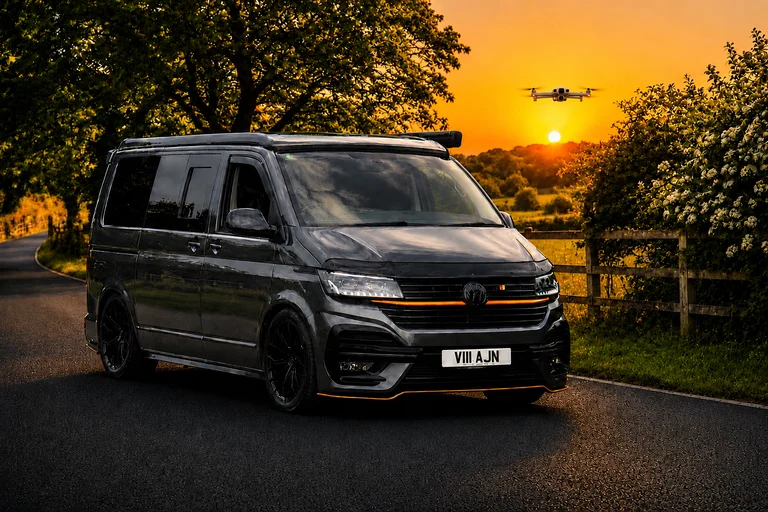
I think Vanilla has reached that point.
What started as a normal campervan electrical system has quietly grown into a proper little mobile energy network.
☀️ 200W roof solar 🔵 Victron SmartSolar MPPT 🔋 110Ah AGM leisure battery ⚡ Victron Orion DC-DC charger 🔌 Anderson connections 🟧 Jackery Explorer 240 v2 🔥 Jackery Explorer 1000 v2, AKA Kindle ⚒️ Jackery Explorer 2000 v2, AKA Forge
And the really clever bit?
These systems can help each other.
I can harvest power from the sun.
Life with Vanilla
Store it in Vanilla.
Store more in the Jackerys.
Move the Jackerys around.
Run appliances outside.
Charge drones.
Top up Torque.
Run cinema.
Make coffee.
And, if Vanilla’s leisure battery starts looking tired after a grey couple of days…
I can use a Jackery to recharge Vanilla itself.
Now we’re talking.
This isn’t just camping power anymore.
This is the NIX GRID. ⚡🧡🚐
🟧 THE THREE JACKERYS
My Jackery fleet now covers three very different jobs.
🟧 JACKERY 240 v2
The little orange scout
Capacity: 256Wh AC output: 300W
Capacity 256Wh
AC output 300W
This is the one I grab when I don’t want to think about weight.
A different perspective
Drone day? Take the 240.
MacBook in the awning? Take the 240.
Charge phones, cameras, lights, router, Action 4 or a few drone batteries?
Perfect.
It weighs very little, takes up almost no space, and for low-power jobs it punches absurdly above its size.
🔥 JACKERY 1000 v2
Kindle: the everyday Vanilla workhorse
Capacity: 1,070Wh AC output: 1,500W
This is the sweet spot.
Big enough for proper appliances.
Small enough to move without making a ceremony out of it.
Cinema.
Microwave.
Coffee.
Fridge backup.
Laptop.
Drone charging.
Torque top-ups.
Battery rescue.
Kindle is the one that quietly says:
“Yeah, I can probably run that.”
⚒️ JACKERY 2000 v2
Forge: the big orange hammer
Capacity: 2,042Wh AC output: 2,200W
Forge is different.
Forge isn’t really a gadget charger.
Forge is base camp power.
It is what I use when I want to stop glancing nervously at the battery percentage.
It can handle heavier cooking.
Longer fridge operation.
Out on the trail
Serious e-bike charging.
Larger appliances.
Long weekends.
Emergency backup.
And crucially, it has enough stored energy to put a serious amount of power back into Vanilla’s leisure battery.
Three boxes.
Three jobs.
One ridiculously flexible system.
⚡ TOTAL NIX PORTABLE POWER
Add them together and I have:
🔋 3,368Wh OF PORTABLE BATTERY CAPACITY
That is 3.368kWh of movable energy.
That number alone sounds impressive.
But energy capacity only tells half the story.
There are two numbers that really matter.
Wh = how much energy I’ve got
W = how quickly I can use it
So the 240 might have enough stored energy to technically cook something…
but with only 300W AC output, it can’t run a 1,000W microwave.
Kindle can.
Forge can run even more.
That is why the three Jackerys complement one another so well.
🧮 THE NIX REAL-WORLD RULE
Battery specifications are lovely.
Real life is messier.
When I use a mains appliance, the Jackery has to convert battery DC into 230V AC.
That costs energy.
So instead of pretending every single watt-hour is magically available, I use a deliberately sensible planning figure of roughly:
⚡ 84% usable through AC
That gives me:
Jackery Nominal Sensible AC planning figure 🟧 240 v2 256Wh ~215Wh 🔥 Kindle 1,070Wh ~900Wh ⚒️ Forge 2,042Wh ~1,715Wh
For direct USB-C or 12V use, efficiency is normally better.
This is important because I’d rather be pleasantly surprised by 10% left than standing outside Vanilla at midnight holding a half-cooked pie while the Jackery displays 0%.
🌅 SCENARIO ONE: A NORMAL MORNING IN VANILLA
Let’s start with something real.
I wake up somewhere quiet.
No hookup.
At the campsite
No campsite bollard.
Just Vanilla, trees, birds and an unreasonable desire for coffee.
☕ Coffee machine: 1,000W for 5 minutes
That uses around 83Wh at the appliance.
Allow for losses and Kindle has spent roughly:
🔥 ABOUT 9-10%
Forge?
⚒️ ABOUT 5%
Then I open the MacBook.
Do a bit of NIX work.
Check the weather.
Look at drone maps.
Upload something.
Plan the day.
A full MacBook charge costs roughly:
🟧 240: around 30% 🔥 Kindle: around 8% ⚒️ Forge: around 4%
Then phone charging.
That barely moves the needle.
A full iPhone charge is only around:
🔥 Kindle: 2-ish%
⚒️ Forge: almost background noise.
So before I’ve even left the van, I’ve had coffee, powered a laptop and charged a phone without touching Vanilla’s main leisure battery.
That is exactly why portable power stations are so useful.
They let me choose where the load comes from.
🎬 SCENARIO TWO: NIX CINEMA NIGHT
This is where the system gets fun.
Nebula Capsule 3 Laser.
Fire TV.
Wi-Fi.
Sound.
Popcorn.
Gazebo.
Dark field.
Vanilla glowing in the background.
Proper NIX cinema.
Let’s say the total setup averages around 75W.
Approximate runtime:
Jackery Full cinema setup 🟧 240 ~3 hours 🔥 Kindle ~12 hours ⚒️ Forge ~23 hours
So a two-hour film costs roughly:
🟧 240: ~70%
🔥 Kindle: ~17%
⚒️ Forge: ~9%
That means Kindle can comfortably handle a full movie night.
Forge could stage a small film festival.
At some point the people watching would run out before the battery did.
🚁 SCENARIO THREE: VANILLA BECOMES DRONE BASE CAMP
This is possibly the most NIX use of all.
Park Vanilla somewhere stunning.
Open the side door.
Jackery out.
Drone batteries charging.
MacBook running.
Footage copying.
Phone on charge.
Wi-Fi online.
Coffee nearby.
Suddenly Vanilla has become a little mobile production unit.
🚁 Mini 4 Pro
The Mini 4 Pro batteries are small in energy terms compared with even the 240.
Roughly:
🟧 240: around 10 full batteries
🔥 Kindle: around 40+
⚒️ Forge: around 80+
At that point I’m not running out of electricity.
I’m running out of weather, daylight and excuses.
🚁 Mavic 2 Pro
The Mavic 2 batteries are much bigger.
Still:
🟧 240: around 3
🔥 Kindle: around 13-14
⚒️ Forge: around 25+
That is proper field capability.
🚵 SCENARIO FOUR: TORQUE COMES HOME HUNGRY
Now we step into bigger energy territory.
Torque has a 600Wh Bosch battery.
That is no longer a little gadget battery.
That is a serious chunk of stored energy.
If Torque comes back from Cannock with 40% left, it needs roughly 360Wh replaced to get back to full.
🟧 240
Useful emergency top-up.
Not enough for a full recharge.
🔥 Kindle
A proper serious recharge.
A full 0-100% Torque refill could use around:
🔥 70-80%
⚒️ Forge
Much more relaxed.
A full Torque battery could cost roughly:
⚒️ 35-40%
So if Torque comes back with 40% remaining, Forge could top it up to full and still have plenty left for everything else.
That is brilliant.
Forge isn’t just storing electricity.
It is storing:
🚵 FUTURE MILES
🍟 SCENARIO FIVE: DINNER OFF-GRID
This is where people often assume batteries become useless.
Not so.
You just have to understand power.
🍲 Microwave
Let’s take a 1,160W microwave.
Five minutes:
🔥 Kindle: ~11%
⚒️ Forge: ~6%
Ten minutes:
🔥 Kindle: ~21%
⚒️ Forge: ~11%
That means reheating dinner is absolutely practical.
I’m not microwaving for an hour.
I’m doing five minutes.
Maybe seven.
Job done.
🍟 Air fryer at 1,400W
Ten minutes:
🔥 Kindle: ~26%
⚒️ Forge: ~14%
Fifteen minutes:
🔥 Kindle: ~39%
⚒️ Forge: ~20%
That’s where Forge earns its nickname.
Fifteen minutes of chips for around a fifth of the battery?
That’s entirely usable.
🔥 Induction hob
Kindle tops out at 1,500W.
Forge goes to 2,200W.
That means a 2,000W induction hob is Forge territory.
At full 2,000W draw:
10 minutes: roughly 19%
15 minutes: roughly 29%
20 minutes: roughly 39%
That is proper off-grid cooking.
Not survival food.
Not a cereal bar and a shrug.
Actual hot food.
🧊 SCENARIO SIX: THE FRIDGE HAS TO KEEP GOING
Vanilla’s compressor fridge is the sort of appliance that really matters.
It cycles.
So it may draw 40-50W when the compressor is running, then almost nothing when it isn’t.
Using roughly 35W average as a sensible planning figure:
🟧 240: around 6 hours
🔥 Kindle: around 26-27 hours
⚒️ Forge: around 49-52 hours
Forge potentially gives me roughly two days of fridge backup.
That matters if:
🌧️ Solar has been poor 🔋 Leisure battery is low 🚐 I’m stationary 🍺 Beer security has become critical
A van can survive many things.
Warm beer should not be one of them.
🌧️ SCENARIO SEVEN: TWO GREY DAYS AND VANILLA IS STARTING TO SAG
Now we reach the most interesting part of the whole system.
Imagine this:
It’s been grey for two days.
Solar harvest has been poor.
The fridge has been running.
Webasto has been used.
Lights.
Water pump.
Phones.
Some general 12V use.
The leisure battery is sitting much lower than I’d like.
Traditionally my options are:
🚐 Drive somewhere 🔌 Find hookup ⚙️ Run the engine 💡 Start rationing power
But now there is another option.
I take a Jackery.
Switch on 230V.
Plug in the Victron Blue Smart IP65 12/10 charger.
Connect it to Vanilla’s leisure system.
And suddenly…
⚡ THE JACKERY BECOMES A CAMPSITE HOOKUP
That is the bit I love.
The leisure battery doesn’t care where the Victron’s 230V supply comes from.
It could be:
🏠 A house socket
🏕️ A campsite bollard
or…
⚒️ Forge sitting on the floor
The Jackery provides mains.
The Victron handles the battery properly.
Beautiful.
🔵 THE VICTRON BLUE SMART 12/10
My Blue Smart is the 12V / 10A model.
That means during the bulk stage it can push up to roughly:
🔋 10Ah PER HOUR
So, in simple terms:
1 hour = up to 10Ah
2 hours = up to 20Ah
3 hours = up to 30Ah
4 hours = up to 40Ah
5 hours = up to 50Ah
The word up to matters.
As the AGM battery fills, the Victron reduces current during absorption and eventually moves into float/storage.
It is not simply dumping 10A forever.
That is exactly why I like using it.
The Jackery doesn’t have to understand AGM charging.
The Victron does that job.
⚡ HOW MUCH ENERGY IS BEING MOVED?
At around 14.4V during charging:
14.4V × 10A = 144W
So the Blue Smart can be delivering around 144W into the battery.
After allowing for:
⚡ Jackery inverter losses
🔵 Victron charger losses
🔋 Battery inefficiency
I use a rough planning figure of:
⚡ 170-180Wh FROM THE JACKERY PER 10Ah DELIVERED
Now the numbers get really interesting.
🟧 240 v2 → VANILLA
The 240 can run the Blue Smart.
That alone is brilliant.
But at around 170Wh-ish per 10Ah delivered, one hour of full-rate charging is a big bite.
Roughly:
🟧 65-70% OF THE 240
for around:
🔋 10Ah BACK INTO VANILLA
So the 240 is not my “recharge the whole leisure battery” machine.
It is my emergency energy jerry can.
Picture this:
It’s midnight.
Leisure battery is lower than I’d like.
I want to keep the fridge and heater electronics comfortable until morning.
Plug in the 240.
Give Vanilla 10Ah.
Done.
That could be exactly enough to make the difference.
🔥 KINDLE → VANILLA
Now we get serious.
One hour of Blue Smart charging:
🔋 ~10Ah into Vanilla
Cost to Kindle:
🔥 ~16-17%
Three hours:
🔋 ~30Ah into Vanilla
Cost to Kindle:
🔥 ~45-50%
Five-ish hours, assuming plenty of bulk charging:
🔋 ~50Ah added
Kindle could be close to spent.
But look at what that means.
Vanilla has a 110Ah AGM leisure battery.
So 30Ah is roughly:
🔋 27% OF THE BATTERY’S NOMINAL CAPACITY
And 50Ah is almost:
🔋 HALF OF VANILLA’S ENTIRE LEISURE BATTERY CAPACITY
That is huge.
Kindle isn’t just powering gadgets.
It can perform a major battery rescue.
⚒️ FORGE → VANILLA
Forge is where this becomes slightly ridiculous.
One hour:
🔋 ~10Ah back into Vanilla
Forge cost:
⚒️ ONLY AROUND 8-9%
Three hours:
🔋 ~30Ah added
Forge cost:
⚒️ ~25%
Five hours:
🔋 approaching 50Ah added
Forge cost:
⚒️ around 40-45%
So picture the real-world scenario.
Vanilla is at around 50% state of charge.
That means roughly 55Ah of the 110Ah nominal battery has been used.
Now I connect Forge.
The Blue Smart starts charging.
The Victron does its bulk stage.
Then absorption.
Then float.
Forge quietly feeds the process.
And in pure energy terms, Forge has enough in reserve to bring back roughly half a leisure battery and still have around half of itself left.
That is an astonishing amount of backup.
🤯 FORGE IS ALMOST A SECOND LEISURE BATTERY SYSTEM
This is the bit that changes how I think about it.
Forge isn’t literally wired in as a second leisure battery.
But energetically?
It is in the same league.
Vanilla’s AGM is:
110Ah at around 12V
That’s roughly a little over 1.3kWh nominal energy.
Forge stores:
⚒️ 2,042Wh
Even after losses, that is enough stored energy to make Forge a genuinely substantial backup reservoir.
And unlike a permanently installed second battery…
Forge can move.
It can be outside powering cooking.
Then inside powering cinema.
Then later it can spend three hours feeding energy back into Vanilla.
That is deployable energy.
And that is the really clever part.
☀️ SCENARIO EIGHT: SUNSHINE CHANGES THE WHOLE EQUATION
Now let’s add the roof.
Vanilla has the 200W PV Logic solar panel feeding the leisure battery through the Victron SmartSolar MPPT.
So while all these loads are happening…
the roof may be putting power back.
This is why simply asking:
“How long will the battery last?”
isn’t really enough anymore.
A better question is:
⚡ WHAT IS TODAY’S ENERGY BUDGET?
Imagine a decent sunny day.
Morning:
☕ Coffee 💻 MacBook 📱 Phone
Then:
🚁 Drone charging
Afternoon:
☀️ Solar steadily feeds Vanilla
Evening:
🍲 Microwave dinner
Then:
🎬 Film in the gazebo
At the end of the day, maybe Kindle has dropped by 40%.
But meanwhile Vanilla’s roof has harvested hundreds of watt-hours.
So the total system may have consumed far less net energy than the individual loads suggest.
That is why solar is such a game changer.
🔄 THE NIX ENERGY LOOP
This is roughly how I now see the whole van.
☀️ ENERGY COMES IN
☀️ Solar 🚐 Alternator 🔌 Campsite hookup 🏠 Mains charging
🔋 ENERGY GETS STORED
🔋 Vanilla AGM 🟧 240 🔥 Kindle ⚒️ Forge
⚡ ENERGY GOES OUT
🧊 Fridge 💡 Lights 🔥 Webasto electrics 📱 Phones 💻 MacBook 🚁 Drones 🚵 Torque 🎬 Cinema ☕ Coffee 🍲 Microwave 🍟 Cooking
🔁 AND ENERGY CAN MOVE BETWEEN SYSTEMS
Jackery 230V ⬇️ Victron Blue Smart ⬇️ Vanilla AGM
That last part is the magic.
🌙 SCENARIO NINE: A NIGHT WITH NO SOLAR LEFT
Imagine I’m off-grid.
The sun has gone.
Leisure battery is at 60%.
Forge is sitting at 80%.
I know the fridge is going to run all night.
Webasto may come on.
Phones need charging.
Rather than waiting for the leisure battery to fall into uncomfortable territory, I can make a proactive decision.
Run the Blue Smart from Forge for two hours.
Potentially add:
🔋 ~20Ah
Forge drops by roughly:
⚒️ ~17%
Now Vanilla has a much healthier battery going into the night.
That is exactly how I want to use the system.
Not:
“Wait until something is nearly flat.”
But:
The problem
“Move energy around before it becomes a problem.”
That is proper energy management.
📊 THE BIG NIX REAL-WORLD TABLE
Job 🟧 240 🔥 Kindle ⚒️ Forge Capacity 256Wh 1,070Wh 2,042Wh AC output 300W 1,500W 2,200W Full cinema setup ~3h ~12h ~23h 35W fridge average ~6h ~27h ~50h MacBook charges ~3 ~12-13 ~25 Mini 4 Pro batteries ~10 ~40+ ~80+ Mavic 2 batteries ~3 ~13 ~25+ Full Torque equivalents partial ~1.3 ~2.5 Microwave ❌ ✅ ✅ 1.4kW air fryer ❌ ✅ ✅ 2kW induction ❌ ❌ ✅ Blue Smart charger ✅ ✅ ✅ ~10Ah back into Vanilla ~65-70% ~16-17% ~8-9% Approx max useful AGM top-up ~14Ah ~55-60Ah ~110Ah theoretical class
🟧 WHICH JACKERY DO I REACH FOR?
🟧 240 v2
“I’m going out for the day.”
Best for:
🚁 Drones 📱 Phones 💻 Laptop 📸 Cameras 💡 Lighting 📡 Router 🔋 Emergency Vanilla top-up
This is the one that disappears into the van until I need it.
Then suddenly it becomes incredibly useful.
🔥 KINDLE
“I’m camping properly.”
Best for:
🎬 Cinema ☕ Coffee 🍲 Microwave 🍟 Cooking 🧊 Fridge backup 🚁 Serious drone charging 🚵 Torque 🔋 Major leisure-battery recovery
Kindle remains the best all-rounder.
It’s the Goldilocks Jackery.
Not too small.
Not too huge.
Just extremely useful.
⚒️ FORGE
“We’re off-grid and I don’t want to care.”
Best for:
🔥 Heavier cooking 🍟 Air fryer 🍳 Induction 🧊 Long fridge backup 🚵 Multiple Torque charges 🎬 Multi-night cinema 🔋 Serious Vanilla recharge ⚡ Emergency power reserve
Forge feels less like a battery and more like a movable campsite bollard.
🧠 WHAT I’VE LEARNED
The biggest lesson from all this isn’t that I own three Jackerys.
It is that portable power becomes much more useful when you stop treating each battery as an island.
Vanilla’s AGM does one job.
Solar does another.
Kindle does another.
Forge does another.
The 240 does another.
But because they can interact, the whole system becomes stronger than any one part.
If solar is good?
Use the sun.
If solar is poor?
Use stored Jackery power.
If I need cinema outside?
Move Kindle.
If Torque needs energy?
Use Forge.
If Vanilla’s battery has dropped too far?
Plug the Blue Smart into a Jackery and move the energy back.
That is resilience.
🚐 THE NIX OFF-GRID DREAM
The goal was never to build a van full of batteries just for the sake of owning batteries.
The goal was freedom.
To park somewhere beautiful.
Turn everything off that doesn’t matter.
Turn on everything that does.
Have cold food.
Hot coffee.
Warmth.
Internet.
Cinema.
Drones.
Music.
Laptop power.
Bike charging.
And enough reserve that I’m not spending the evening staring at a voltmeter.
That is what this system now gives me.
⚡ THREE JACKERYS. ONE VANILLA. LOADS OF OPTIONS.
🟧 The 240 is the scout.
🔥 Kindle is the workhorse.
⚒️ Forge is the powerhouse.
☀️ The roof keeps harvesting.
🔵 Victron keeps everything civilised.
🔋 Vanilla stores the essentials.
And when I need to, I can move energy from one part of the system to another.
That is the clever bit.
That is the fun bit.
And that is where this whole NIX experiment has ended up.
Not just portable power.
Not just solar.
Not just batteries.
⚡ A MOBILE ENERGY ECOSYSTEM
And I absolutely love it.
NIX // VANILLA // JACKERY // VICTRON // SOLAR // TORQUE // CINEMA // OFF GRID // BRING YOUR OWN ELECTRICITY ⚡🟧🚐🔥⚒️☀️🔋