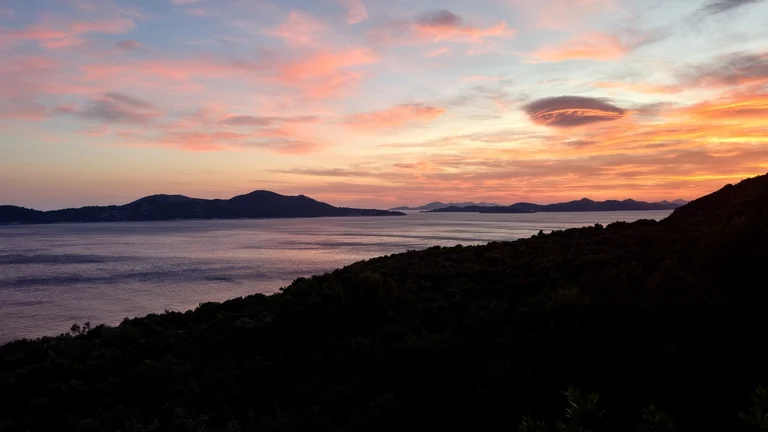
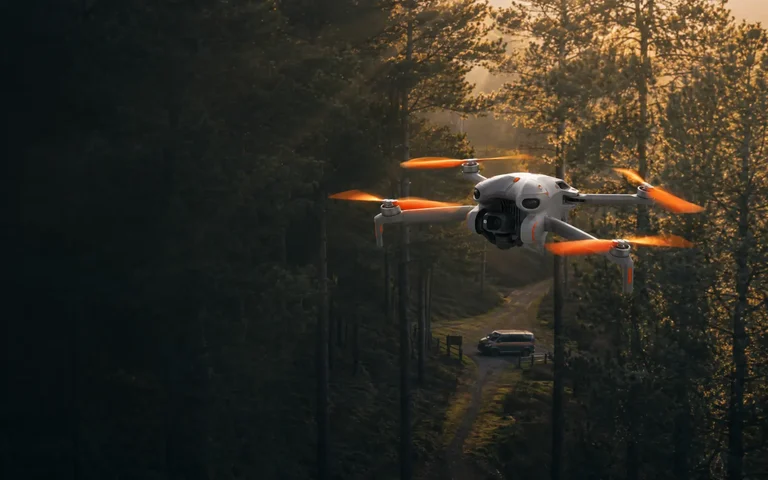
EUROPEAN DRIFT: I LEFT STAFFORD WITH A VAGUE PLAN. 30 DAYS LATER VANILLA HAD CROSSED 12 COUNTRIES.
Thirty days. Twelve countries. 3,850.6 VW miles. Alpine passes, Tuscany, the Adriatic, Dubrovnik, Plitvice, Lake Bled, Volkswagen's home town and 2,376 photographs. I left Stafford with Vanilla, charged cameras and a direction rather than an itinerary. This is what happened.

6 May 2026.
I climbed into Vanilla outside home in Staffordshire with a stocked fridge, charged drone batteries, cameras everywhere and what could generously be described as a plan.
The plan was basically this:
Go to Europe.
After that, keep going.
I did not want thirty hotel bookings, seventeen laminated reservations and an itinerary telling me that I had precisely forty-three minutes to enjoy a lake.
I wanted a direction.
That distinction turned out to be the whole point of the trip.
Thirty days later Vanilla rolled back into Staffordshire having crossed 12 countries, covered 3,850.6 miles according to her VW trip computer, spent just over 101 hours actually driving and consumed roughly 527.8 litres of diesel.
France. Switzerland. Italy. Slovenia. Croatia. Bosnia and Herzegovina. Austria. Germany. Czechia. The Netherlands. Belgium. Then France again and home.
My Flickr archive contains 2,376 photographs from the Drift.
2,199 of them are geotagged.
Which means this story is no longer me sitting at home saying, "I think I went that way."
The photographs know.
The GPS knows.
Vanilla knows.
And, occasionally, all three agree that I made some fairly questionable decisions involving mountain roads.
📸 EXPLORE ALL 2,376 EUROPEAN DRIFT PHOTOS
6 May to 4 June 2026
30 days
29 nights away
12 countries
3,850.6 VW miles / approximately 6,197 km
101h 02m driving
Approximately 527.8 litres diesel consumed
Approximately 33.2 mpg overall
6 proper low-movement days
2,376 Flickr photographs
2,199 geotagged photographs
One VW campervan called Vanilla
DAY ONE: ESCAPE VELOCITY
Every big trip begins somewhere spectacular.
Mine began with the M6.
Stafford. Daventry. Milton Keynes. Luton. St Albans. Dartford. Kent.
Not exactly the Amalfi Coast, but every mile south felt different because I knew I was not coming back for a month.
Then came Folkestone and the Channel Tunnel.

There is still something slightly magical about Le Shuttle.
You drive onto a train in Kent. You sit in your own campervan for half an hour. A door opens and suddenly the road signs are French.
Vanilla was abroad.
I kept going.
The first night was barely a night at all. The Drift simply continued across France until the following day finally brought me to Belfort.
That opening push was important.
Britain was now behind me.
Europe was in front.
LAUTERBRUNNEN: THIS CANNOT POSSIBLY BE REAL
Then Switzerland happened.
Belfort gave way to the Bernese Oberland. Lake Thun appeared. Interlaken passed beneath Vanilla's wheels.
And then the road narrowed into Lauterbrunnen.
I had seen photographs.
I had watched videos.
None of them prepared me for it.
Vertical cliffs. Waterfalls dropping hundreds of feet. Snow hanging on the mountains beyond. Little wooden houses sitting on the valley floor looking as though somebody had arranged them for a model railway.
And there I was, in Vanilla.

I stayed two nights.
The data for the second day barely moves at all, which is exactly what I wanted. Vanilla stayed planted while I wandered around with cameras, looked upwards repeatedly and attempted to process the fact that people actually live somewhere this ridiculous.
This became one of the defining lessons of the Drift.
Stopping is part of travelling.
If I had spent thirty days chasing mileage, I would have returned with an impressive fuel bill and very little idea where I had been.
OVER THE ROOF OF EUROPE
Leaving Lauterbrunnen on 10 May turned the steering wheel into entertainment.
Surses. Silvaplana. St Moritz. Pontresina. Bernina. Poschiavo. Brusio.
The average speed for the day was only around 33 mph.
That tells you everything.
These were not motorway miles.
They were hairpin miles.
Look-at-that miles.
Pull-over-I-need-another-photograph miles.
Snow banks, mountain passes and enormous views eventually gave way to Italy near Tirano.
Then the mountains opened.
And Lake Como appeared.

I stopped at Domaso on the northern end of the lake.
Mountains dropping into blue water. Italian villages on the shoreline. Vanilla parked within walking distance of it all.
This was approximately four days after Stafford.
The M6 already felt like something I had dreamed.
TUSCANY: I APPEAR TO HAVE DRIVEN INTO A POSTCARD
Lake Como led south through Lombardy, around Milan and eventually into Tuscany.
Then the pace changed again.
Lucca.
Pisa.
San Gimignano.
Monteriggioni.
Siena.
This was Europe in another language entirely.


Pisa delivered the famous tower.
There are certain world landmarks that are almost too familiar before you see them. Then you stand in front of one and discover that familiarity does not spoil it at all.
The Leaning Tower looks even less structurally sensible in person.
Siena was different.
Narrow streets, warm stone, huge squares and that lovely sensation that the modern world has simply been tolerated rather than invited.
Vanilla threaded through Tuscany while I discovered perhaps the finest use yet invented for a campervan fridge: keeping something cold for later while I went wandering through an ancient city.
FLORENCE: THE PHOTO ARCHIVE SETTLES THE ARGUMENT
One of the joys of having the full Flickr export is that it occasionally corrects the forensic reconstruction.
The vehicle telemetry only really showed the Florence corridor.
The photographs are less shy.
At around midday on 13 May my geotagged pictures place me at Piazzale Michelangelo.
So yes.
I was definitely in Florence.

Storm clouds rolled across the Tuscan hills while sunlight kept breaking through and lighting different sections of Florence.
For photography, it was magnificent.
The Duomo above the terracotta roofs. The Arno below. Dark weather piling up behind the city.
I stayed there far longer than necessary.
Which, by now, was becoming a theme.
VENICE: GET LOST. THEN GET LOST BETTER.
Bologna came next, then northern Italy carried me towards Venice.
The photographs again fill in details that a vehicle tracker cannot.
On 14 May my camera was right inside Venice.

Venice is not really somewhere you navigate.
You drift.
You follow a narrow street.
It disappears.
You cross a bridge.
You turn left because everybody else turned right.
Twenty minutes later you arrive somewhere magnificent and have absolutely no idea how.
Which made it rather appropriate for something called the European Drift.
TRIESTE: THE TRIP CHANGES TEMPERATURE
By the time I reached the Gulf of Trieste the trip had changed again.
The high Alps were behind me.
Tuscany already felt like something from weeks earlier.
The Adriatic was ahead.

I spent two nights around Sistiana.
Espresso in the morning. Rain on Vanilla's roof. The sea nearby.
I could feel the journey becoming warmer and slower.
The next chapter was Croatia.
THREE COUNTRIES IN ABOUT FIFTY MILES
On 16 May Vanilla left Italy, crossed Slovenia and entered Croatia in a day of barely fifty miles.
That is one of the pleasures of driving Europe.
Sometimes a country requires hundreds of miles.
Sometimes you have barely finished adjusting to the road signs before another border arrives.
I dropped towards Opatija and Ičići on the Kvarner coast.
And then I stopped again.
Two nights.
No hurry.
Exactly as intended.

CROATIA: THE ROAD STARTS FOLLOWING THE SEA
From Opatija I turned south.
Crikvenica. Novi Vinodolski. Zadar. Šibenik. Split.
The Adriatic became a companion.
The road would climb away from it, twist inland, then suddenly throw the sea back into view through a gap in the mountains.
Every few miles another little harbour appeared.
Every evening the light became absurd.


I spent two nights around Split.
Another deliberate pause.
By this stage I had completely stopped thinking of the journey as a list of destinations.
I was collecting mornings.
Coffees.
Harbours.
Meals outside Vanilla.
Warm evenings.
Little campsites that I had never heard of two days earlier and would remember long after I got home.
THE ROAD TO DUBROVNIK
On 21 May I followed one of the great coastal sections of the whole expedition.
Podgora. Igrane. Drvenik. Gradac. Ploče. Opuzen. Brijesta. Slano.
The road kept dropping towards the Adriatic and climbing away again.
Temperatures nudged into the mid twenties.
The landscape became more Mediterranean with every mile.
And eventually I reached the Dubrovnik region.
I found Camp Pod Maslinom and parked Vanilla beneath olive trees a short walk from the sea.
It cost about €20 a night including hookup.
Nothing flashy.
Nothing over-engineered.
Just a wonderfully old-school campsite, warm Croatian air, cold beer and the Adriatic nearby.
I sat outside that evening watching the sky turn orange and had one of those rare moments when a trip catches up with you.
I had driven here from Stafford.
DUBROVNIK: THE GEOGRAPHICAL HIGH-WATER MARK
The next day I went into Dubrovnik proper.
My Flickr photographs place me right inside the old city.
At roughly 1,163 miles from home as the crow flies, Dubrovnik was effectively the farthest point of the entire Drift from Staffordshire.

The old walls. Terracotta roofs. Blue sea. Stone streets.
There are travel moments where everything aligns.
The weather.
The view.
The atmosphere.
The knowledge of how far you have come.
Dubrovnik was one of mine.
And I did not immediately leave.
I stayed three nights in the region.
Because if you drive a campervan more than a thousand miles from Stafford and find somewhere this good, racing away the following morning would be ridiculous.
COUNTRY NUMBER TWELVE: BOSNIA WAS REAL
The northbound journey finally began on 24 May.
And this is where a later bit of forensic detective work corrected the official country count.
Neum, Bosnia and Herzegovina.
Not a line that merely grazed a border on a map.
Not a GPS wobble.
Vanilla's own telemetry records the location and country.
The Flickr geotags agree.

There was even a VW fuel-counter reset there.
So Bosnia did not sneak onto the country list through creative accounting.
Vanilla genuinely went there.
Then we crossed back into Croatia and continued north towards Omiš.
PLITVICE: NATURE HAS DISCOVERED THE SATURATION SLIDER
The Adriatic eventually disappeared behind me and the road turned inland.
On 25 May I reached Grabovac, beside Plitvice Lakes National Park.
The plan was an early start before the international selfie-stick championships began.
The following morning I went in.
And Plitvice was bonkers.
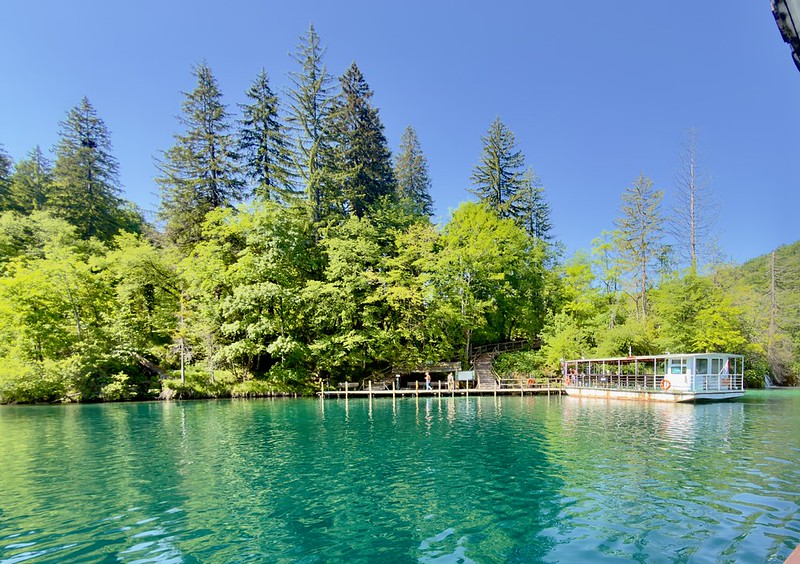
Turquoise lakes.
Clear water.
Waterfalls everywhere.
Forest.
Wooden boardwalks winding through it all.
Even after Lauterbrunnen, Plitvice managed to make me stop and stare.
That takes some doing.
LAKE BLED: THE POSTCARD IS APPARENTLY REAL
From Plitvice I crossed into Slovenia and made for Bled.
This entire trip had a habit of producing places that looked suspiciously computer-generated.
Lake Bled might be the champion.

Island church.
Castle.
Mountains.
Reflections.
A lake apparently built specifically for landscape photographers.
After nearly three weeks on the road, places like this had started to create a strange problem.
My definition of "nice view" was becoming completely unreasonable.
AUSTRIA: ZELL AM SEE AND THE TURN NORTH
On 27 May I crossed into Austria.
Villach. The Tauern corridor. Pfarrwerfen. Taxenbach.
Then Zell am See.
Another Alpine lake.
Another mountain backdrop.
Another evening when Vanilla's sliding door effectively became a cinema screen.

The following morning I pointed Vanilla north through Tyrol and into Bavaria.
The great southern arc of the Drift was over.
I was heading towards Germany.
NEAR MUNICH: EVEN MY FLICKR PHOTO SAYS SO
I eventually stopped at Herrsching am Ammersee, south-west of Munich.
One of my photographs is actually titled Near Munich.
Which is refreshingly helpful.

CZECHIA: THE UNPLANNED BITS ARE OFTEN THE BEST BITS
Then came the turn north-east.
Regensburg. Mitterteich. Waldsassen.
And across another border into Czechia.
Cheb.
Cheb was not one of those enormous names I had been imagining before the trip.
That made it better.
Trips need places you did not spend six months anticipating.
Places where expectations have not arrived ahead of you.
Cheb became one of those.
WOLFSBURG: VANILLA GOES HOME
Then came one of the wonderfully nerdy emotional moments of the entire expedition.
Wolfsburg.
Volkswagen country.
After the Alps, Italy, the Adriatic, Croatia, Bosnia, Slovenia, Austria and Czechia, Vanilla had arrived at the spiritual home of the company that built her.
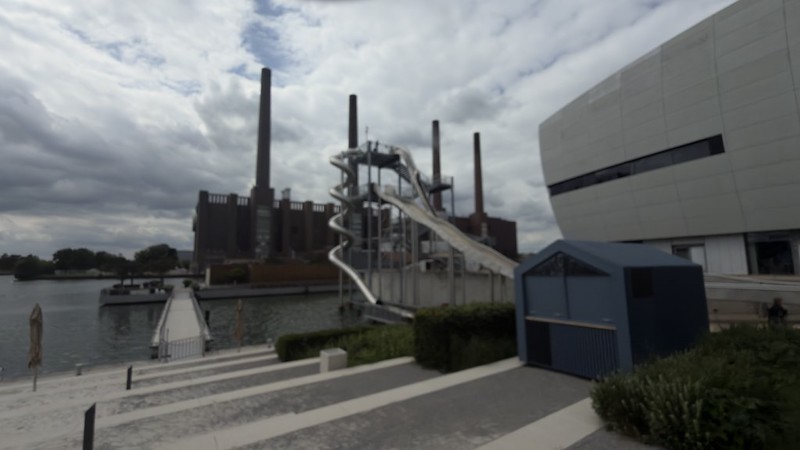
I know.
It is a van.
It does not have feelings.
But after living in it for nearly a month, driving it through mountain passes and waking up in twelve different countries, taking Vanilla to Wolfsburg felt oddly significant.
Like introducing somebody to the family.
Except the family has enormous factories.
DEVENTER: FOOTBALL MAKES EVERYWHERE FEEL SLIGHTLY LIKE HOME
Germany eventually gave way to the Netherlands.
I reached Deventer and stayed for two nights.
Again, barely any movement on the second day.
Perfect.
Deventer became one of the surprise favourites of the trip.
Beautiful streets. Water. Old buildings. A relaxed atmosphere.
And then football.
Go Ahead Eagles.
De Adelaarshorst.
As an Aston Villa supporter, I immediately understood it.
A proper ground sitting inside its community.
Floodlights above residential streets.
History rather than corporate wallpaper.
The sort of football stadium that feels as though it belongs to people.

BRUGES: THE FINAL BEAUTIFUL DISTRACTION
From Deventer I turned south-west.
Antwerp.
Belgium.
Then Bruges.
By this point I knew I was almost home.
Europe apparently decided to make leaving difficult.

Bruges feels almost unfairly intact.
Canals, stone streets, towers and old buildings packed tightly together.
After nearly four weeks of constantly changing scenery, it still managed to produce something completely different.
DE PANNE AND DUNKIRK: THE MOOD CHANGES
The final Continental day carried me towards De Panne and Dunkirk.
This part of the trip felt different.
Not dramatic in the Alpine sense.
Not warm and exuberant like Croatia.
Quieter.
Heavier.

Standing on that coastline, knowing the history attached to it, was a completely different kind of travel experience.
Then it was Coquelles.
Le Shuttle.
England.
And I still did not stop.
THE LAST NIGHT WASN'T REALLY A NIGHT
On 3 June I crossed back into Britain.
Vanilla kept moving.
Kent. Sevenoaks. South London. Beaconsfield.
The final driving session ran across midnight.
At around 04:25 on 4 June, the Drift finally closed back where it had started.
Staffordshire.
Home.
Thirty days after leaving.
The same van.
The same driveway.
A very different camera roll.
THE NUMBERS WERE MORE INTERESTING AFTER I GOT HOME
For months I loosely described the European Drift as "about four thousand miles."
That was close enough for pub conversation.
It was not good enough for NIX.
Later I put the evidence together properly.
VW trip-computer sessions.
Google Timeline.
Raw GPS.
Journey telemetry.
Fuel-reset data.
Flickr geotags.
The strongest vehicle figure is now 3,850.6 miles.
Raw GPS independently gives about 3,826.5 miles.
Google's denser road geometry gives about 4,128 miles.
Different systems measuring slightly different things.
None of them need to be added together.
The important point is that they agree on the shape of what happened.
Vanilla crossed Europe.
WHAT 2,376 PHOTOGRAPHS ACTUALLY REMEMBER
The obvious photographs are there.
Lauterbrunnen.
Lake Como.
Pisa.
Siena.
Florence.
Venice.
The Adriatic.
Dubrovnik.
Plitvice.
Lake Bled.
Austria.
Wolfsburg.
Bruges.
But just like the NC500, that is not really what thousands of photographs preserve.
They preserve the queue for the Channel Tunnel before any of it had happened.
The first espresso of the morning.
Vanilla wedged between olive trees at a Croatian campsite.
The meal after a long driving day.
The weather turning over Florence.
A random roadside stop because the view demanded it.
An evening when I did absolutely nothing except sit outside the van.
Currywurst in Germany.
A drink with a friend in Deventer.
The photograph you take simply because, in that exact second, you think:
I want to remember this.
WHAT VANILLA PROVED
This trip was also a month-long experiment.
Could a short-wheelbase VW campervan genuinely become home for thirty days?
Could the bed, fridge, storage, power, kitchen and living space work across nearly four thousand miles?
Could I spend a month moving from country to country without wishing I had bought a giant motorhome?
Yes.
Drive.
Park.
Cook.
Sleep.
Charge.
Photograph.
Move on.
Vanilla is not huge.
That is part of the reason it works.
Mountain roads did not intimidate it.
European towns did not swallow it.
I could park, sleep, wake up and move whenever I wanted.
That freedom was worth more than another metre of kitchen worktop.
WHAT I PROVED TO MYSELF
There was another question behind the trip.
Could I actually do this?
A month.
Solo.
Across Europe.
Without every night booked.
Without somebody else making decisions.
Without getting fed up with driving or my own company.
The answer surprised me.
I loved it.
And I learned something that now sits at the heart of how I want to travel.
I don't want a perfect itinerary.
I want a direction.
An itinerary tells me where I have to be.
A direction tells me where I might end up.
THE MAP CLOSED. THE STORY DIDN'T.
Before 6 May 2026, European Drift was an idea.
A line on a map.
Thirty days later it was fuel, photographs, campsites, borders, food, weather, mountains, coastlines, motorway tolls, Alpine roads, old cities and 101 hours behind Vanilla's steering wheel.
Most importantly, it changed my sense of distance.
Lauterbrunnen no longer feels impossibly far away.
Neither does Tuscany.
Or Croatia.
Or Lake Bled.
They are all now filed somewhere in my head under a much simpler heading:
Places I can drive to.
That might be the most dangerous thing the European Drift gave me.
Because now, when I look at a map of Europe, I don't really see borders.
I see roads.
And I wonder where Vanilla is going next.
📸 EXPLORE THE COMPLETE EUROPEAN DRIFT ON FLICKR
NIX European Drift
6 May to 4 June 2026
John Nickolls / NIX
Vanilla / Europe / No Rush. No Straight Line.